Appearance
Unplanned work
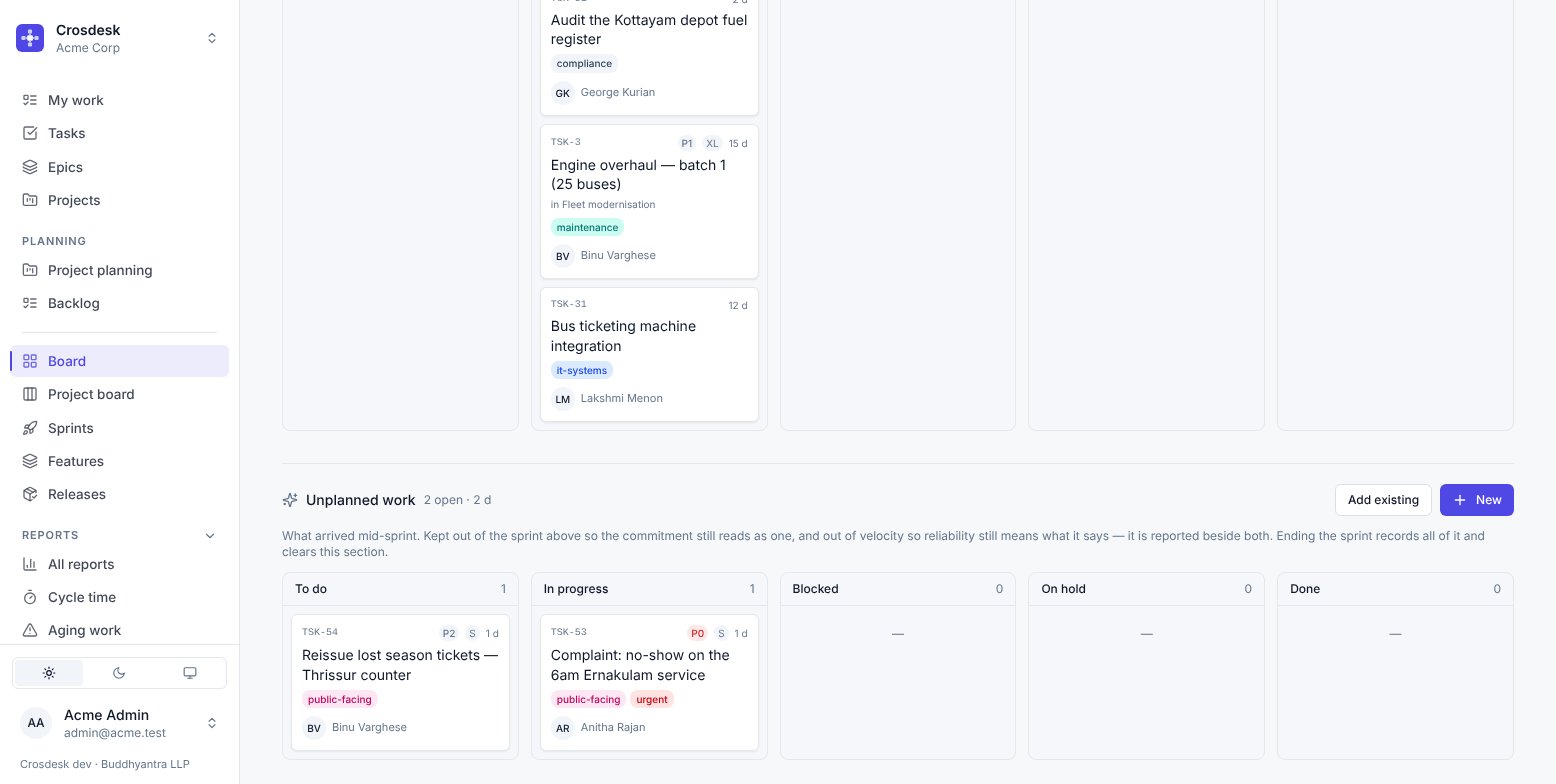
What arrived mid-sprint, kept beside the commitment rather than inside it.
The problem it solves
A customer complaint arrives on day three. It is real work, somebody has to do it, and it was not in the plan.
Put it in the sprint and two things break: the commitment no longer reads as one thing, and velocity stops meaning what it says — next quarter's forecast is built on a number that quietly includes work nobody planned.
Leave it out entirely and something worse happens: the time is spent and nothing records it. The team looks slow for reasons the data cannot explain.
Unplanned work is the third option. The work is tracked, on the board, beside the sprint. The sprint above still reads as the commitment that was made. Both are reported.
Using it
The section sits under the sprint board, with its own five columns and its own tally.
- New creates a task straight onto the unplanned board. It needs a department, an assignee and an estimate, like any other task — unplanned does not mean unmeasured.
- Add existing moves a task that is already in the system onto the section. Only To do and In progress work can join; something already finished or blocked is not what arrived mid-sprint.
- Remove returns a task to where it came from: the backlog if it had no sprint, otherwise its sprint.
The board's filters apply here too.
What happens when the sprint ends
Ending the sprint:
- Records each unplanned task against the sprint, marked as unplanned, in the snapshot.
- Converts it to planned work.
- Moves anything unfinished to the next sprint or the backlog, like any other spillover.
- Clears the section, ready for the next sprint.
The record is permanent and is what Member effort reads when it splits a person's delivery into planned and unplanned.
What it does to reports
- Velocity counts planned work only. That is the point — velocity is about the reliability of a commitment.
- Member effort reports all three: all work, planned, and unplanned, side by side.
- Throughput and cycle time count everything finished, because they are about flow rather than commitment.
If a team's velocity looks stable while everyone reports being overloaded, Member effort's unplanned column is where to look.